
Shopify marketing that works as one loop, not five apps
Shopify marketing is four jobs on repeat: find out who buys, make the emails, posts and ads for them, put them out, and learn what worked. Tilly runs that loop for your store, starting with a free audit and waiting for your approval at every step.
Free · nothing to connect · the first pass takes about a minute
- for your first store audit, with nothing to connect
- $0for your first store audit, with nothing to connect
- agents working from one brand profile
- 8agents working from one brand profile
- credits for a whole email flow, written and sent to Klaviyo as a draft
- 30credits for a whole email flow, written and sent to Klaviyo as a draft
- free credits when you sign up (a card is saved, not charged)
- 100free credits when you sign up (a card is saved, not charged)
Most stores do the middle part and skip the ends. Something writes an email, something else makes an ad, and nobody connects either one to who it was for or what it earned. Online shop marketing gets cheaper the moment the results of this month decide what gets made next month. That is the loop, and it is the product.
Marketing a Shopify store in the order that pays back
There is an order to marketing a Shopify store, and it starts with the people already arriving. Capture their email and send a welcome flow. Put reviews on your product pages. Answer the questions buyers search for. Then pay for traffic, once the store turns visits into orders.
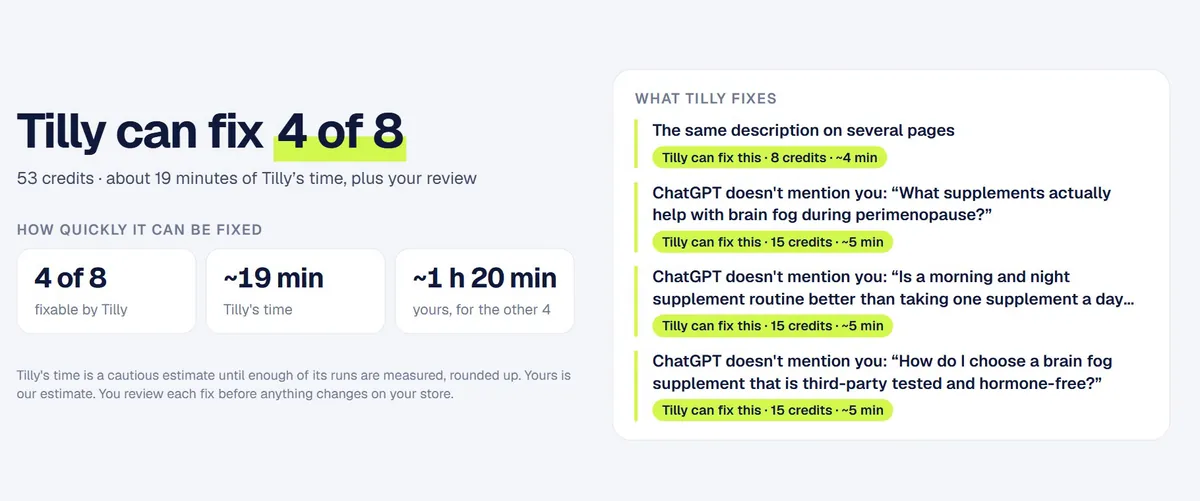
Tilly's audit scores your store out of 100 across email, SEO, ads, conversion and brand, and turns the findings into a 30-day plan ordered by effort and impact for your store. It ends by drafting a four-email welcome flow for your main persona, so you finish with something to publish.
- Email capture and a welcome flow first
- Reviews and product pages next
- Search content, then paid traffic
Shopify marketing features you already have
Shopify ships more than most owners use. On its own site it lists its marketing tools as Messaging, Forms, Automations and Segmentation, and the admin has a Marketing section where campaigns and automations live. Marketing in Shopify starts there for a lot of stores. source, checked 8 October 2026
Those features handle the sending. What they do not do is decide what to say to whom. Marketing with Shopify's own tools works best when the message is already worked out, which is the part Tilly does.
- Messaging for email and SMS
- Forms to collect sign-ups
- Automations and segments built in
One brand profile behind every email, post and ad
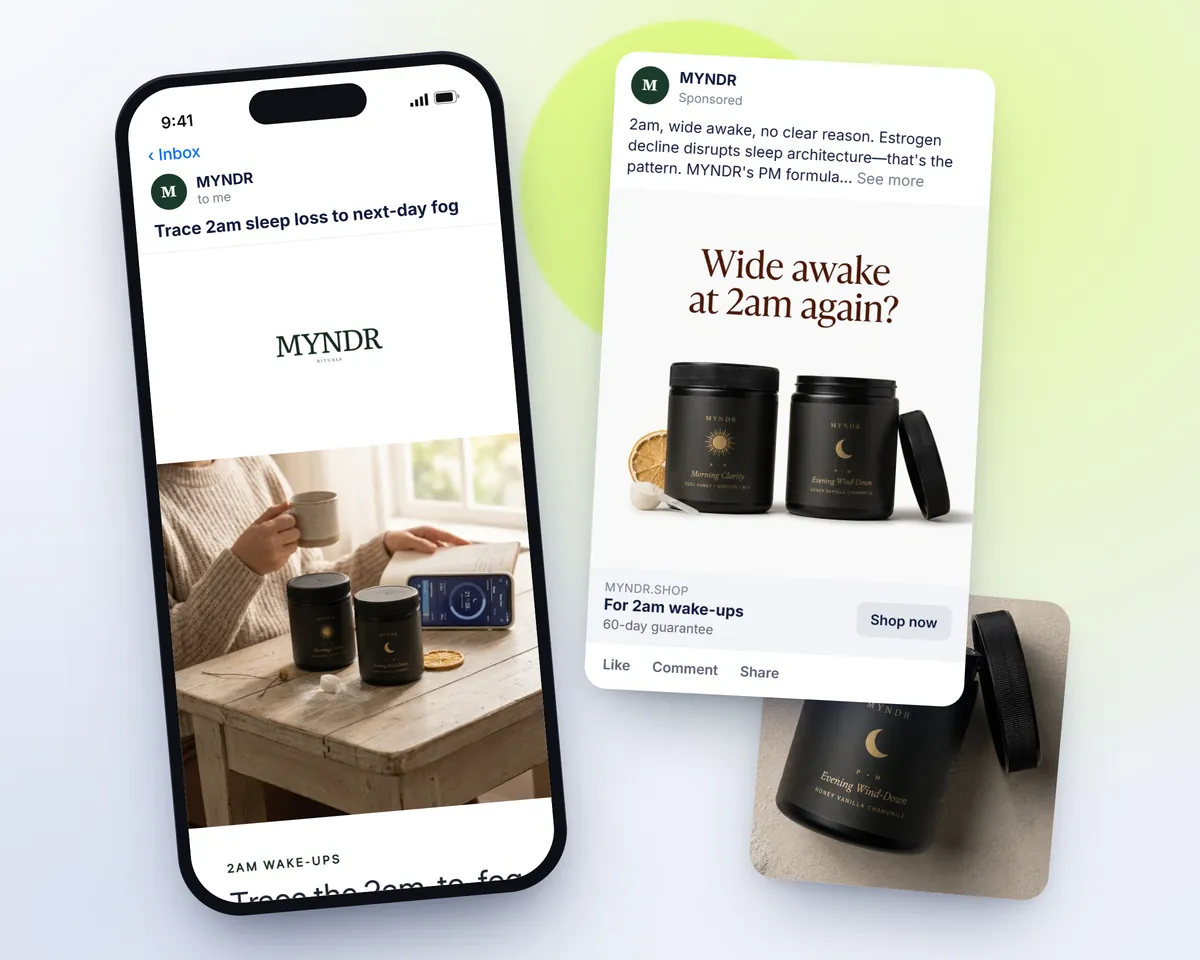
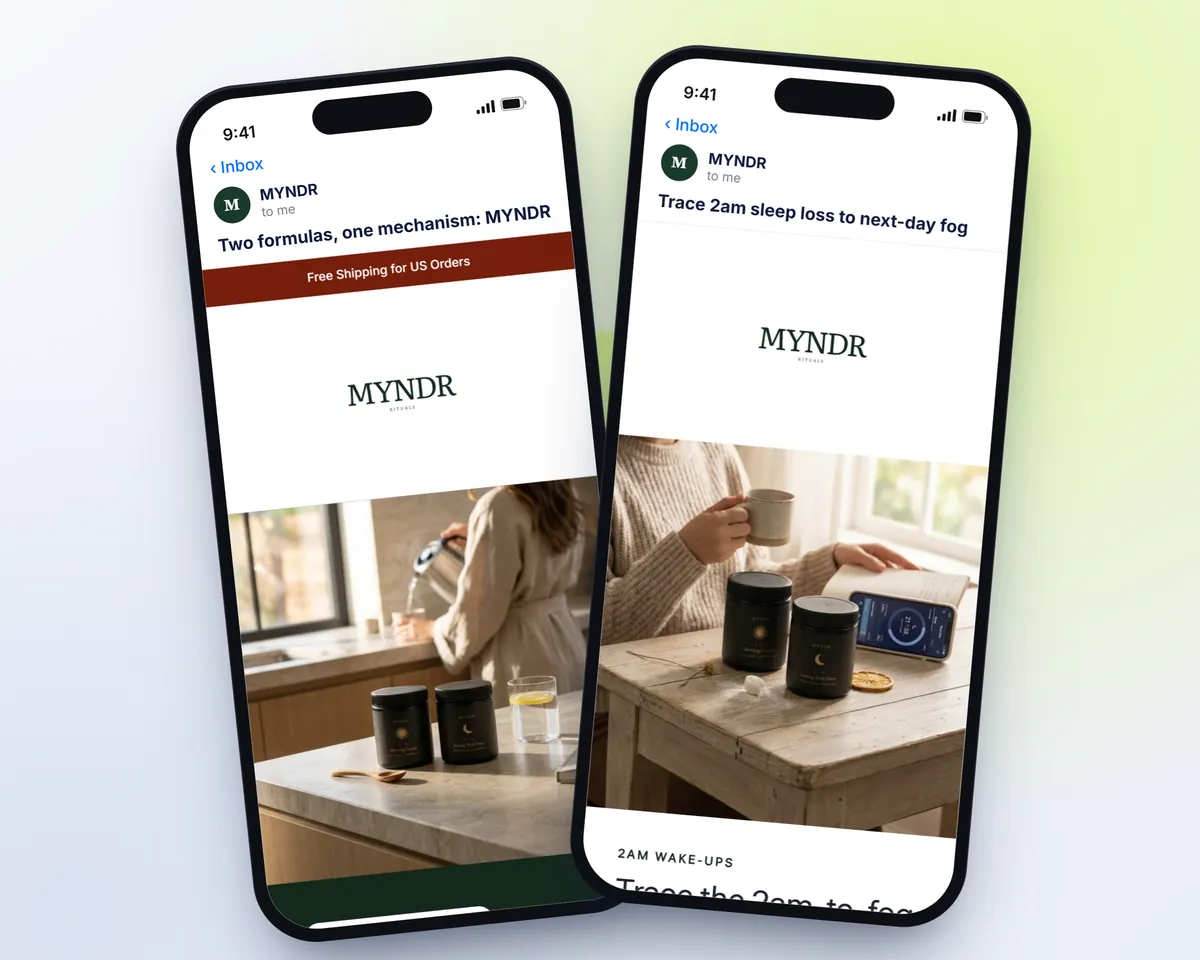
Tilly runs 8 agents, and all of them write from the same brand profile: your voice, your look, your offers and the rules of your category. You can edit any of it. That is why a blog post, a welcome email and a Meta ad from Tilly sound like the same store.
Every piece is written for one persona and one pain point from your audit. Nothing is published without your approval: emails go to Klaviyo as drafts, ads publish paused, and SEO changes wait for you to press Apply.
- Voice, look, offers and category rules in one profile
- Every piece aimed at one persona
- Nothing published without your approval
Results attached to the work
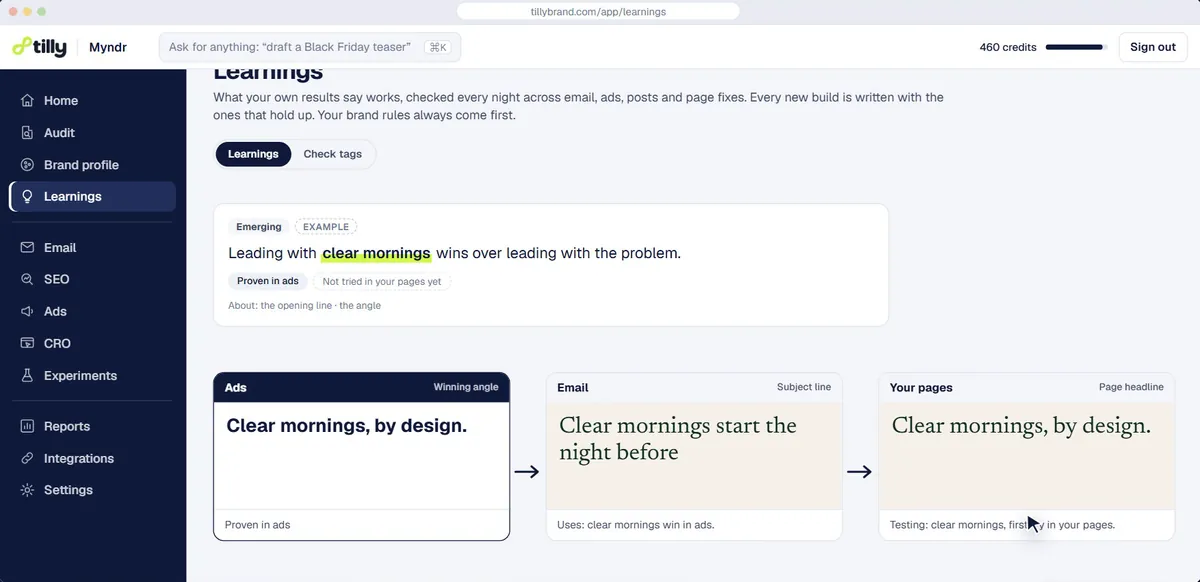
Each week Tilly sends your results and the next three things worth doing, free. With Google Analytics connected, read only, each page fix you mark done is measured on that page's own visits and sales, four weeks after against four weeks before.
Then the loop runs again: what won shapes the next round of emails, posts and ads. That is the difference between doing marketing for Shopify store traffic and doing it for the customers you actually have.
- A weekly report with the next three things to do
- Page fixes measured four weeks after against four weeks before
- Winners feed the next round
See what your store is missing
Paste your store URL. Tilly reads the storefront, your reviews and your marketing, and comes back with a store score, your customer personas and a 30-day plan.
Free · nothing to connect · the first pass takes about a minute
Shopify stores marketing with Tilly

- Creo Fleur Atelier


- Whimsical What's It Press
Questions people ask
Where should I start with marketing my Shopify store?
With the people already visiting. A sign-up form and a welcome email turn some of them into buyers at no extra cost, and every later channel sends people to the same place. Run the free audit first and it will tell you which of these your store is missing.
Can I do marketing your Shopify store without paying for ads?
Yes, for a while. Email to the people who sign up, reviews on product pages and blog posts that answer buyers' questions cost time, not ad spend. Paid ads work better once those are in place, because the visits they buy convert.
Is marketing with Shopify's own tools enough?
For sending, often yes at the start. Shopify's own messaging, forms and automations cover simple campaigns. What they leave to you is the strategy: who each email is for, what it says and what to do after it lands.
What does a marketing plan for Shopify store owners include?
Who your buyers are and what stops them, the flows every store needs, a monthly calendar of campaigns, the search pages worth writing, a small ad test, and a way to read the results. Tilly's audit produces the first version as a 30-day plan.
Does Tilly replace my email app or my ad accounts?
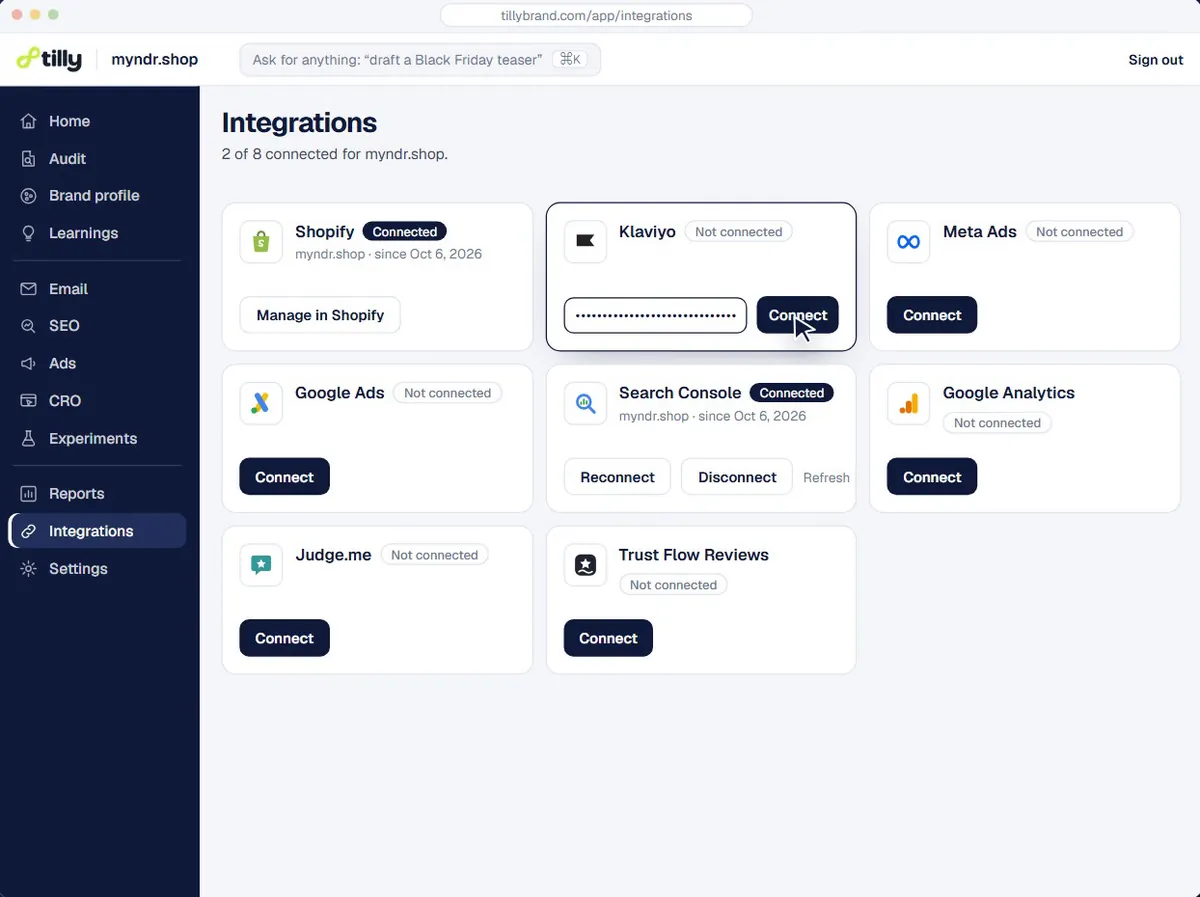
No. Tilly writes into the tools you already use, Klaviyo, Meta, Google Ads and Shopify, and reads their results back. You keep your accounts and your data.
How much does Shopify marketing with Tilly cost?
The first audit is free, and you get 100 credits when you sign up. Paid plans start at $49 a month for 500 credits; an email flow is 30 credits and a campaign 10. See pricing.
Sources
- Shopify Messaging: shopify.com/email-marketing, checked 8 October 2026
Written by Tilly. Tilly is one of the apps on this page, so read it knowing that. Report an error.
Start with a free audit of your store
Paste your store URL. The first pass takes about a minute and needs no account. Save a card (nothing is charged) and Tilly reads the whole store and works out who buys from you.
Signing up starts with the audit: your account is made at the end of it, and nothing is charged.